

HSE University Presents Game Engineering Innovations at Moscow International Video Games Week
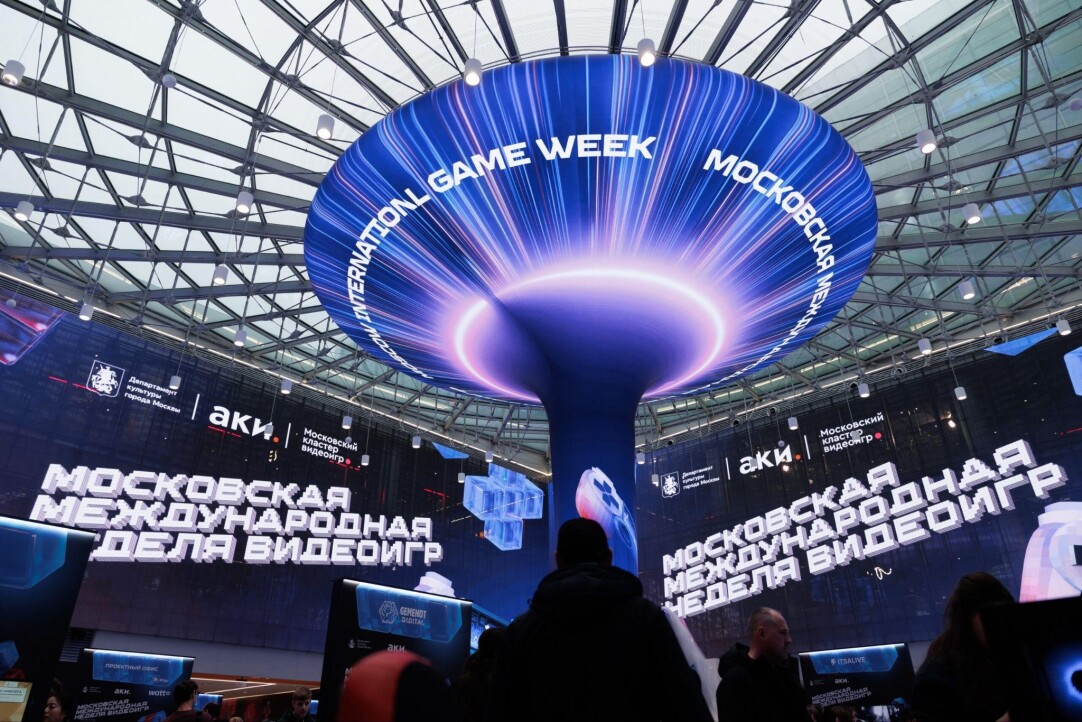
HSE University recently participated in a key 2025 gaming industry event, the Moscow International Video Games Week (MIVGW). HSE MIEM took part in several formats, hosting an open day for its online Master’s programme ‘Digital Engineering for Computer Games’ and a workshop ‘Gamedev Automation: How AI is Changing the Approach to Virtual Simulation Design.’ Furthermore, the ‘Game Engineering and Interactive Systems’ workshop and indie studio Bear Head Studio showcased their new game engine—the Claw Engine—at the exhibition area at Skolkovo. Experts of the HSE Faculty of Computer Science joined in panel discussions.
Moscow International Video Games Week brought together professionals, investors, publishers, educational institutions, and aspiring developers. The business programme addressed the export of Russian games, staff training, the role of universities in industry development, and new tech trends from AI to production automation. This year’s partners included the Institute for Internet Development (IRI), the Moscow Venture Fund, Buka, MTS Fog Play, the Videogame Industry Development Organization, Rostelecom, Cyberia Nova, Sber, 1CGS, and other organizations supporting the gaming market and technological entrepreneurship.

‘Participation in MIVGW is an excellent opportunity to not only showcase our projects but also establish a direct dialogue with the industry,’ noted Ilya Semichasnov, Director of the HSE MIEM Centre for Project Development Management, Academic Supervisor of the online Master’s programme ‘Digital Engineering for Computer Games’ and Head of the ‘Game Engineering and Interactive Systems’ workshop. ‘We want our students to tackle real market challenges during their studies and see if their solutions meet the needs of studios and publishers.’
On November 27, 2025, MIEM hosted events for school students, university students, and applicants interested in pursuing a career in the gaming industry. Participants learned about current AI technologies in game development, the growing demand for field specialists, and the competencies developed in the online Master’s programme ‘Digital Engineering for Computer Games.’ A separate workshop, ‘Gamedev Automation: How AI is Changing the Approach to Virtual Simulation Design,’ demonstrated with existing project examples how algorithms accelerate prototyping, simplify complex system configuration, and collect game analytics.

Valeria Nemna
‘It is crucial for students to see that AI in gamedev is not an abstract theory but rather very specific pipelines and tools that save months of development,’ emphasised Valeria Nemna, Deputy Director of the Centre for Project Development Management and head of the technological section of the ‘Game Engineering and Interactive Systems’ workshop. ‘At the open day, we showed how these approaches are integrated into the workshop’s projects, from simulations to content generation and test automation.’

From November 28 to 30, at a booth at Skolkovo, the ‘Game Engineering and Interactive Systems’ workshop team presented an open version of the Claw Engine, developed over two years in partnership with indie studio Bear Head Studio. Version 1.2.0 of the engine was released for free installation on the project’s website this autumn.
The Claw Engine is a program for creating 3D games and interactive projects on Windows. It allows users to easily add models, images, and other resources, and develop custom game logic. The latest version features improved physics, enabling realistic real-time collisions, falls, bounces, and object interactions. It includes new tools for landscape editing, visual effects (like smoke or sparks), and environment elements. The developers have also enhanced the automatic world-creation tools, allowing users to quickly adjust the terrain, add details, and even simulate local weather effects.

Dmitry Kovalenko
‘Gamedev has become a steady and confident part of education and project work at MIEM,’ said HSE University Vice Rector and MIEM Director Dmitry Kovalenko. ‘Two years ago, we launched the “Game Engineering and Interactive Systems” workshop, which evolved from several student projects united by the idea of creating a single product. This academic year, we launched the Master’s programme “Digital Engineering for Computer Games.” The gaming industry, like no other, responds instantly to audience demand, so having our own popular products is a significant achievement we are proud to present.’

HSE students—the workshop participants—actively manned the booth and demonstrated the Claw Engine. They showcased the engine’s features, explained how its systems worked, and collected visitor feedback.

Grigory Morozov
‘Showing an engine you’ve been developing for a year to both professionals and beginners immediately reveals what works well and what needs improvement. Sometimes a random passer-by finds a bug the testers missed,’ said Grigory Morozov, a workshop participant and HSE MIEM student. ‘Such moments provide real-time feedback and highlight potential user pain points, motivating us to improve our product.’

According to Vladimir Nikitin, Deputy Head of the ‘Game Engineering and Interactive Systems’ workshop and Manager of the Centre for Project Development Management, participation in MIVGW was an important step in building a partnership.
Ilya Semichasnov participated in the MIVGW business programme as an observer for the Association of Professionals in the Operation and Game Development Industry (APRIORI). The association has concluded strategic agreements with Chinese companies Lewan Games, Arity Limited, and Huamin Group for mutual game promotion in Russian and Chinese markets, project localisation, and joint digital economy initiatives.
‘Accessing international markets is impossible without such industry unions as APRIORI,’ Ilya Semichasnov emphasised. ‘For universities, participation in these agreements means new career tracks for graduates and opportunities to attract industrial partners to educational programmes, project work, and internships.’


Ilya Semichasnov also joined the round table ‘Investing in Talents: Education and Universities in Gamedev,’ focusing on systemic approaches to staff training, joint programmes between universities and companies, and practice-centred education and internships. Marina Belyaeva, Manager of the Centre for Project Development Management and Head of the Visual Communications Unit of the ‘Game Engineering and Interactive Systems’ workshop, spoke at the round table ‘Not Gamedev but School: How to Create an Environment Where Employees Grow with the Project.’ Experts discussed building a culture of continuous learning, balancing deadlines with employee development, and positioning organisations as spaces for professional growth.
‘Online Master’s programme “Digital Engineering for Computer Games” and the HSE MIEM “Game Engineering and Interactive Systems” workshop are open to applicants and partners interested in joint projects at the intersection of education, science, and the gaming industry,’ Ilya Semichasnov concluded.

The ‘Software Engineering of Computer Games—PIKI’ project group from the HSE Faculty of Computer Science also participated in the event.
PIKI’s leading expert, Denis Pozdnyakov, spoke at the panel discussion ‘Gamedev Professions 2025: Who is Currently Sought After,’ detailing key industry roles, employee tasks, and applicant requirements.
Head of the PIKI group Olga Maksimenkova moderated the panel discussion ‘Indie Way: How to Assemble Your Team and Release Your First Game,’ where experts discussed building reliable teams, assigning roles correctly, and finding resources to realise plans.

See also:

Scientists Train Neural Network to Generate Process Plans from 3D Models
Researchers at the HSE FCS AI and Digital Science Institute have developed CAD2TechSpec, a framework that converts 3D models of mechanical parts into machining process plans—step-by-step instructions for machine tools. The solution aims to reduce the time required for the design and preparation of technical process documentation in mechanical engineering, aircraft manufacturing, and other high-tech industries. The study findings have been published in PeerJ Computer Science.
Biologists Discover 'Molecular Fingerprint' of Preeclampsia
Researchers at HSE University employed a new method to model hypoxia in placental cells during pregnancies complicated by preeclampsia and identified molecular markers of tissue hypoxia. Since hypoxia is one of the key mechanisms underlying preeclampsia, these findings are important for a more accurate and timely diagnosis of the disease and for the development of effective treatment methods. The paper has been published in Placenta.
‘Hedgehog’ Versus ‘Relatives’: Researchers Measure How the Brain Responds to Unexpected Words During Natural Speech
Russian neurophysiologists, including researchers from HSE University, have demonstrated the feasibility of using event-related fields (ERFs) to study brain activity during natural speech perception. The researchers showed that this approach can be applied not only to individual words but also to continuous speech. Their findings indicate that words whose meanings differ significantly from the preceding context require longer processing times. The study also reveals that the brain processes function words in two stages: first, it identifies their grammatical role and then uses this information to predict the next word. The study has been published in Frontiers in Human Neuroscience.
Hybrid Intelligence: Competencies in the Age of AI Discussed at Technoprom-2026
Artificial intelligence is not creating new professions, but rather transforming the nature of existing ones. This was the conclusion reached by participants in the panel session ‘Hybrid Intelligence: Digital and Human Drivers of Development,’ organised by the Institute for Statistical Studies and Economics of Knowledge (ISSEK) at HSE University as part of the 13th International Forum of Technological Development (Technoprom-2026). The experts discussed how the nature of work is changing, which skills are becoming increasingly sought after, and what prevents companies from fully capitalising on new technologies.
Scientists Develop New Solution for 6G Communication Systems
A terahertz neuromorphic circuit developed by scientists at HSE University could make 6G communication systems both more accurate and energy-efficient. The circuit enables indoor tracking of mobile devices with an accuracy of up to 99%. The results were presented at PIERS 2026, an international symposium on Photonics and Electromagnetism held in China.
Scientists Develop Algorithm for More Reliable Processors in Data Centres
Researchers from HSE MIEM and Samara University have developed the LRF-3D algorithm to automatically bypass idle nodes in three-dimensional networks-on-chip. Thanks to its hierarchical architecture, the algorithm outperforms existing solutions in both speed and path accuracy, improving processor reliability for use in data centres, supercomputers, and AI computing. The source code and test results are publicly available.
Researchers Develop Method for Direct Generation of Regulatory DNA
Researchers at HSE University have developed a model for generating promoters and enhancers—DNA sequences that regulate gene activity. The model works directly with DNA nucleotides, without first transforming them into a continuous numerical representation. This solution could be useful for applications in synthetic biology and gene therapy. The study results were presented at the ICLR 2026 Workshop ‘Generative AI in Genomics (Gen^2): Barriers and Frontiers.’
Researchers at HSE University and Sber Train Neural Networks to Better Predict User Preferences
The HSE FCS AI and Digital Science Institute and Sber have introduced a new architecture for recommendation systems that combines two classes of models, enabling algorithms to better predict users’ interests and needs. A preprint of the paper has been published on arxiv.org and presented at Urban ML.
Physicists Discover What Happens Inside a Stable Vortex
Large vortices with characteristic spiral arms are often observed in the atmosphere and the ocean. Physicists from HSE University have explained how these structures form and why they retain their shape. The researchers found that velocities at points located along the same vortex arc remain correlated even over long distances. At the same time, this correlation weakens rapidly with increasing distance from the vortex centre. These differences help explain the formation of spiral arms and may improve models of atmospheric and oceanic currents. The findings have been published in Physical Review Fluids.
HSE Computer Science Researchers Win Gold Medal at International Machine Learning Competition
A team comprising HSE International Laboratory of Statistical and Computational Genomics researchers Aleksei Shmelev and Nikita Chervov, 2025 graduate of the HSE Faculty of Computer Science’s Master’s programme in Data Analysis in Biology and Medicine Ivan Gevorkov, and two students from the United States achieved an outstanding result at the 2026 NeuroGolf international machine learning championship. The team won a gold medal and placed seventh overall.